


Views: 0 Author: Site Editor Publish Time: 2025-10-14 Origin: Site


Reinforced Thermoplastic Pipe (RTP) is changing the pipeline industry. Its lightweight and corrosion-resistant properties make it a promising alternative to traditional materials. RTP combines thermoplastic polymers with reinforcing fibers like Aramid, offering increased strength and flexibility.
In this article, we will explore where RTP excels, its design limitations, and the role of Aramid fibers. You'll learn about its benefits and how to determine if it's the right solution for your pipeline needs.
Aramid fibers are synthetic materials known for their outstanding properties such as high tensile strength, low density, and excellent impact resistance. These fibers come in two main categories: Para-aramid and Meta-aramid.
Para-aramids like Kevlar® and Twaron® are characterized by their high strength, thermal stability, and superior resistance to abrasion. They are commonly used in applications that require exceptional impact and tensile strength, such as aerospace, military gear, and protective clothing.
Meta-aramids such as Nomex® are known for their high thermal resistance and are widely used in fireproof clothing and insulation applications. Although they provide excellent heat and fire resistance, they have slightly lower mechanical strength compared to para-aramids.
The unique molecular structure of these fibers gives them their superior mechanical properties, making them an ideal reinforcement material for RTP.
The integration of aramid fibers into reinforced thermoplastic pipes creates a material that combines the benefits of thermoplastic flexibility and aramid’s strength. This synergy significantly improves the RTP's performance by enhancing its strength-to-weight ratio, flexibility, and resistance to cracking under stress. Aramid fibers also improve the overall durability of RTP, especially in environments that demand both flexibility and strength, like offshore pipeline installations or seismic zones.
The reinforcement with aramid fibers allows reinforced thermoplastic pipe to perform better under dynamic load conditions, reducing the likelihood of pipe fractures or failure under tension or impact. This makes RTP suitable for industries where flexibility, durability, and high performance are critical.
Aramid-reinforced RTP finds applications in several high-demand industries:
| Oil and Gas | The combination of flexibility and strength makes RTP ideal for offshore pipelines, where installation and maintenance in deepwater and harsh conditions require durable yet adaptable materials. |
| Water and Chemical Pipelines | The high chemical resistance of aramid-reinforced RTP makes it suitable for transporting corrosive fluids, reducing the risk of pipe degradation and extending service life. |
| Mining | Aramid reinforcement helps RTP withstand heavy physical wear and tear in mining operations, where pipes are subjected to extreme conditions, including abrasive materials and constant physical stress. |
Tip: In regions prone to seismic activity, the flexibility of aramid-reinforced RTP provides significant benefits over traditional materials, reducing the risk of pipeline failures due to ground movement.
One of the most significant advantages of aramid-reinforced RTP is its resistance to corrosion. Unlike steel pipes that degrade over time when exposed to moisture, chemicals, or saline environments, RTP does not rust. This is especially beneficial in offshore oil pipelines, where exposure to seawater could otherwise lead to frequent repairs and replacements.
Aramid fibers enhance the pipe’s ability to resist aggressive chemicals, making it a reliable choice for transporting hazardous fluids. The smooth interior of RTP reduces friction, optimizing flow and energy efficiency, further supporting its role in chemical and oil transport.
The flexibility of aramid-reinforced RTP enables its use in difficult-to-reach areas. Whether it’s deep in the ocean or in remote land-based environments, RTP can be installed with minimal disruption to the environment. Its flexibility reduces the need for multiple joints, lowering the risk of leaks and simplifying installation.
Additionally, the durability of RTP allows it to endure tension, compression, and impacts without cracking or breaking, making it an ideal solution for environments that experience constant shifts in pressure or ground movement, such as offshore or seismic zones.
While the initial installation cost of aramid-reinforced RTP may be higher than traditional materials like steel, its low maintenance needs and longer lifespan result in long-term savings. The lightweight nature of the pipe reduces transportation costs, and the ease of installation further cuts down on labor costs. Additionally, its resistance to corrosion and environmental wear lowers the need for frequent repairs or replacements.
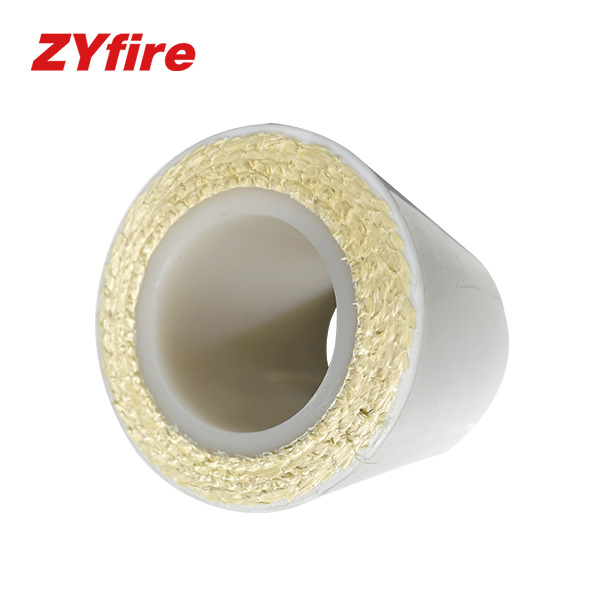
Despite its impressive strength and flexibility, RTP—even when reinforced with aramid fibers—lacks the compressive strength of metal pipes. This limitation means that RTP is not suitable for primary load-bearing applications, such as in deep underground installations or where pipes need to carry heavy external loads. It can bend or deform under pressure, which makes it unsuitable for certain high-stress applications.
While aramid-reinforced RTP excels in a variety of applications, it has some limitations in extreme temperature or pressure conditions. Aramid fibers provide good thermal resistance, but RTP may struggle in high-temperature environments that exceed its operating limits. The pipe’s pressure tolerance is also lower than that of some other materials, such as Thermoplastic Composite Pipes (TCP), which offer greater resistance to high-pressure applications.
The bond between the aramid fibers and the polymer matrix can be a limiting factor for RTP's performance. Aramid fibers have a chemically inert surface, which makes it difficult for the polymer matrix to adhere effectively. This weak interface can lead to issues such as delamination or fiber pull-out under stress. Furthermore, long-term exposure to moisture or UV radiation can degrade the interface, reducing the pipe’s overall performance and lifespan.
Advances in fiber treatment and matrix improvements are continuously expanding the potential applications of aramid-reinforced RTP. Researchers are exploring hybrid composite solutions that combine aramid fibers with other materials to improve the pipe’s strength, durability, and resistance to extreme conditions. Additionally, the integration of smart technologies, such as embedded sensors, could provide real-time monitoring of pipeline integrity, helping to reduce maintenance costs and improve system reliability.
As industries shift toward more sustainable solutions, RTP is finding new applications in emerging markets such as mining, water infrastructure, and renewable energy. Aramid-reinforced RTP’s lightweight and corrosion-resistant properties make it an attractive option for projects in regions where traditional materials would struggle to perform.
RTP is also gaining traction in carbon capture and hydrogen pipeline systems, areas that are expected to see rapid growth in the coming decades. Its environmental advantages, coupled with the increasing focus on decarbonization, position RTP as a key component in the future of sustainable infrastructure.
Aramid-reinforced RTP provides excellent corrosion resistance, flexibility, and cost-effectiveness. However, its compressive strength, temperature limits, and fiber-matrix bonding challenges must be considered for specific applications. As technology advances, RTP will continue to evolve, supporting industries focused on sustainability.
Aramid-reinforced RTP excels in offshore, seismic, water transport, and chemical pipelines. For high-pressure applications, combining RTP with other materials may be necessary. Anhui United Pipeline offers high-quality Aramid-reinforced RTP, providing reliable, durable solutions for pipeline needs.
A: RTP (Reinforced Thermoplastic Pipe) combines thermoplastic materials with reinforcing fibers like Aramid to offer lightweight, flexible, and corrosion-resistant pipes ideal for challenging environments.
A: Aramid-reinforced RTP provides superior corrosion resistance, high flexibility, and cost-effectiveness, making it perfect for offshore, seismic, and chemical pipeline applications.
A: Aramid-reinforced RTP is widely used in oil and gas, water transport, chemical pipelines, and mining, where corrosion resistance and flexibility are crucial.
A: While RTP excels in many areas, it has limitations in compressive strength, temperature tolerance, and fiber-matrix adhesion, making it less suitable for high-pressure or high-temperature applications.


